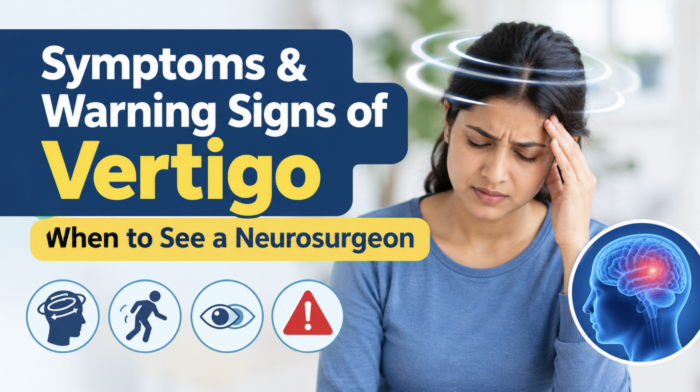
Have you ever felt that the room was spinning around you, even when you were sitting still, a sensation known as vertigo? Perhaps you felt unsteady while walking or experienced sudden dizziness after turning your head in bed.
Such vertigo episodes can be frightening. You may wonder whether something is wrong with your ears, blood pressure or brain.
The good news is that many cases of vertigo are caused by inner-ear problems. However, some symptoms need urgent medical attention.
मैं हूँ डॉ. कवीन्द्र सिंह, a neurosurgeon in Narnaul, Haryana.
In this article, I will explain the common causes of vertigo and dizziness, the vertigo warning signs you should never ignore and when you should see a doctor for vertigo. My aim is to help you understand your symptoms and make informed decisions about your health.
What Is Vertigo? How Is It Different from Dizziness?
People often use the word dizziness to describe different sensations. However, these symptoms do not always have the same cause.
Vertigo is the sensation that you or your surroundings are moving or spinning when no such movement is taking place. Vertigo symptoms may affect your balance and sometimes cause nausea or vomiting.
Light-headedness is different. You may feel faint, weak or as if you are about to lose consciousness. This can happen when your blood pressure drops or your blood sugar becomes too low.
Unsteadiness (balance problems) means you feel off-balance while standing or walking. It may arise from problems involving the inner ear, nerves, brain, muscles or certain medicines.
If you are experiencing repeated dizziness or vertigo, note when it starts, how long it lasts and whether any particular movement triggers it. Also mention any headache, hearing changes, ringing in the ears, weakness or changes in vision.
These details can help your doctor decide which examinations you need and which tests for vertigo you need.

What Are the Common Causes of Vertigo and Dizziness?
द causes of vertigo and dizziness vary from person to person. Some involve the inner ear, while others may be related to blood pressure, medicines or neurological conditions.
1. Benign Paroxysmal Positional Vertigo (BPPV)
BPPV is one of the most common causes of vertigo. It occurs when tiny calcium crystals inside the inner ear move into the wrong part of the balance system.
You may experience sudden spinning or vertigo when turning your head in bed, looking upwards, bending down or changing your head position. Each episode often lasts less than a minute, although you may feel slightly unsteady afterwards. BPPV can affect older adults, but younger people can also develop it. It may sometimes occur after a head injury.
BPPV is usually treatable. A trained healthcare professional can perform specific head-positioning movements, such as the Epley manoeuvre, a common BPPV treatment, to help move the crystals back into the correct position.
If you experience vertigo when turning your head, arrange an assessment rather than repeatedly attempting treatment without knowing the cause.
2. Vestibular Neuritis and Labyrinthitis
The inner ear and the vestibular nerve help control balance. Inflammation affecting this system can cause severe dizziness.
Vestibular neuritis may cause sudden, persistent vertigo lasting several days. Nausea, vomiting and difficulty walking may also occur. Vestibular vertigo affects approximately 5% of adults yearly.
Labyrinthitis can cause similar dizziness and vertigo symptoms and may also affect hearing.
These conditions sometimes develop after a viral illness. However, sudden, prolonged vertigo should not automatically be attributed to an infection. A doctor must assess the symptoms and rule out more serious causes when necessary.
3. Meniere’s Disease (Vertigo with Ringing in the Ears)
Meniere’s disease is an inner-ear condition that can cause repeated episodes of vertigo.
Other symptoms may include ringing in the ears (tinnitus), a feeling of fullness in one ear and fluctuating hearing loss.
If you experience vertigo with hearing loss or ringing in the ears, consult a doctor. An ear, nose and throat (ENT) specialist may recommend a hearing assessment and further evaluation.
4. Low Blood Pressure (Dizziness on Standing) and Blood Sugar Changes
Not every episode of dizziness is true vertigo. If you experience dizziness when standing up, your doctor may check:
- Some people feel dizzy when they stand up quickly after sitting or lying down. This may happen because their blood pressure drops temporarily.
- Dehydration, prolonged exposure to heat and certain blood pressure medicines can contribute to the problem.
- Low blood sugar may also cause dizziness, sweating, shaking, weakness or confusion, particularly in people taking diabetes medicines.
Do not change your prescribed medicines without medical advice.
5. Anaemia, Vitamin B12 Deficiency and Dehydration
- Anaemia can reduce the blood’s ability to carry oxygen effectively. It may cause tiredness, weakness, breathlessness and light-headedness.
- Vitamin B12 deficiency can affect the nerves and may contribute to numbness, tingling or balance problems.
- Dehydration is another possible cause, particularly during hot weather or after prolonged physical activity.
People working outdoors, travelling long distances or spending hours in hot conditions should take particular care to drink enough fluids and eat regular meals.
However, persistent dizziness should not be dismissed as a simple weakness. Your symptoms may require blood tests or other investigations.
Related reading: Hand and Foot Tingling: Vitamin B12 Deficiency or a Nerve Problem? Tingling or numbness in the hands and feet can have several causes, including vitamin B12 deficiency. This post explains when a nerve evaluation may be needed.
6. Migraine-Related Vertigo (Vestibular Migraine)
Some people experience vertigo as part of migraine. A headache may occur during the episode, but it is not always present.
Other symptoms may include sensitivity to light or sound, nausea and a history of recurrent headaches.
If dizziness keeps returning, especially alongside migraine symptoms, your doctor may assess you for vestibular migraine.
Migraine treatment depends on the pattern of symptoms, possible triggers and your medical history.
7. Brain-Related Causes of Vertigo
Less commonly, vertigo or sudden imbalance can result from a problem involving the brain or its blood supply.
Possible causes include ब्रेन स्ट्रोक, bleeding in the brain, certain brain tumours and head injuries.
A brain-related cause becomes particularly concerning when dizziness starts suddenly and occurs with other neurological symptoms. However, some strokes affecting the brainstem or cerebellum can initially present with severe vertigo and imbalance.
This is why a proper clinical assessment matters.
When Is Vertigo Dangerous? Vertigo Warning Signs You Must Not Ignore
Research suggests dizziness affects 15–20% of adults yearly. But, most vertigo is not life-threatening. However, sudden dizziness with neurological symptoms can indicate a stroke or another medical emergency.
Seek emergency medical care immediately if dizziness or vertigo occurs with any of the following:
- Sudden difficulty walking, standing or maintaining balance.
- Weakness or numbness affecting the face, arm or leg, particularly on one side.
- Slurred speech or difficulty understanding what someone is saying.
- Double vision or sudden loss of vision.
- A sudden, severe headache that is unusual for you.
- New confusion, loss of consciousness or difficulty staying awake.
- Sudden severe dizziness after a head injury.
New hearing loss with sudden vertigo also requires urgent medical assessment.
Remember the BE-FAST Stroke Symptoms and Warning Signs
BE-FAST is a useful way to recognise possible stroke symptoms.
बी - संतुलन: Sudden loss of balance or difficulty walking.
ई - आंखें: Sudden double vision or loss of vision.
एफ - चेहरा: Drooping on one side of the face.
A – Arms: Weakness or numbness in an arm or leg.
S – भाषण: Slurred speech or difficulty speaking.
टी - समय: Seek emergency help immediately and note when the symptoms began.
In India, call 112 for emergency assistance or use the appropriate local ambulance service. Do not drive yourself to the hospital.
Do not wait until the next morning if you suspect a stroke. Early assessment can make a critical difference. Know more about brain stroke treatment.
Related reading: ब्रेन स्ट्रोक के लक्षण और आपातकाल - पहले 60 मिनट क्यों मायने रखते हैं. A stroke is a medical emergency, and early recognition and prompt hospital care matter. This post explains the symptoms and what to do in the first hour.
What Should You Do When Vertigo Starts?
If you suddenly feel dizzy or experience spinning, your immediate priority should be to prevent a fall.
Follow these precautions:
- Sit or lie down in a safe place.
- Keep your movements slow and avoid sudden changes in head position.
- Ask someone to stay nearby if you feel unsteady.
- Avoid driving, climbing stairs alone or working at heights until you feel safe and have received appropriate advice.
- Drink water if you are able to swallow normally and dehydration is a possible cause.
- If you have diabetes, check your blood sugar when appropriate and follow your prescribed plan for treating low blood sugar.
If dizziness is severe, new, persistent or associated with warning signs, seek medical assessment rather than relying on home treatment for vertigo.
How Is Vertigo Diagnosed? Tests and Examination
There is no single test that identifies the cause of every episode of dizziness. Diagnosis begins with understanding your symptoms and examining you.
The examination may include blood pressure measurements, eye movements, hearing, strength, coordination and walking.
If BPPV is suspected, a trained professional may perform the Dix-Hallpike test for BPPV. This involves changing your head and body position while observing your eye movements and symptoms.
Blood tests may be recommended when anaemia, blood sugar abnormalities or vitamin deficiencies are suspected. A hearing assessment may help when ear symptoms are present.
An MRI brain or CT scan for vertigo may be considered when the history or examination raises concern about a stroke, bleeding, head injury or another brain-related problem. The choice of scan depends on the suspected condition and the urgency of the situation.
Vertigo Treatment: What Actually Helps?
Vertigo treatment depends on the underlying cause. There is no single tablet or home remedy that treats every type of dizziness. Stroke and other serious neurological condition-related vertigo require urgent assessment and condition-specific treatment.
A neurosurgeon may be involved when a brain or spinal condition requires specialist evaluation. However, surgery is not a routine treatment for vertigo. Most cases are managed without an operation.
How Can You Reduce the Risk of Vertigo and Dizziness?
You cannot prevent every cause of vertigo. However, certain everyday habits may reduce some common triggers and lower the risk of falls.
- Drink enough fluids, particularly during hot weather and physical activity.
- Eat regular meals and follow your diabetes management plan if applicable.
- Stand up slowly after sitting or lying down.
- Get adequate sleep and maintain a regular sleep routine.
- Review your medicines with your doctor if dizziness begins after a change in treatment.
- Keep floors dry and well-lit, particularly at night, for fall prevention.
- Use support when walking if you have balance problems.
- Avoid driving when you are experiencing vertigo or feel unsafe.
If you experience repeated episodes, arrange an assessment rather than relying on these measures alone.
Vertigo and Dizziness in Narnaul and Nearby Areas of Haryana
People living in and around Narnaul, महेंद्रगढ़ and neighbouring areas may spend long hours travelling, working outdoors or performing physically demanding tasks.
During hot weather, dehydration, irregular meals and heat exhaustion can contribute to dizziness. However, these factors should not be assumed to explain every episode.
If you experience persistent or recurrent dizziness, seek medical advice from a qualified doctor in Narnaul or nearby.
Residents of Narnaul, Mahendergarh, Kanina, Ateli, Nangal Choudhary, Singhana, धारूहेड़ा, Neemrana, Patan and beyond should seek emergency care at the nearest suitable hospital if they develop sudden neurological symptoms or severe, unexplained dizziness.
Do not delay emergency treatment to travel to a particular specialist or clinic.
For non-emergency concerns involving possible brain or neurological conditions, an appropriate specialist assessment can help determine the next steps.
My Advice
Pay attention to how your vertigo or dizziness symptoms begin, how long they last and whether they occur with other warning signs.
Most importantly, never ignore sudden dizziness accompanied by weakness, speech problems, double vision, severe headache or an inability to walk safely. These symptoms need urgent medical assessment. If you still have any queries, you can speak to me.
About the Author
Dr Kavindra Singh is a neurosurgeon practising at Rainbow Multispeciality Hospital & Trauma Centre, Narnaul, Haryana. He trained at UCMS Delhi, AIIMS New Delhi, PGIMER Chandigarh and SGPGI Lucknow. His clinical interests include brain, spine and nerve conditions.
Know more about Dr Kavindra Singh
Medical disclaimer: This article is intended for general health education. It does not replace a medical consultation, examination or individual treatment advice. Seek emergency medical care if you experience symptoms suggestive of a stroke or another serious condition.